UN Weather Agency: 2026 on Track to Be Among Four Warmest Years on Record
This year is on course to rank among the four warmest years ever recorded, the World Meteorological Organization said Monday, and a very strong El Niño is expected to keep pushing...

Fredericksburg · Community Photo
This year is on course to rank among the four warmest years ever recorded, the World Meteorological Organization said Monday, and a very strong El Niño is expected to keep pushing temperatures and the risk of extreme weather higher into 2027.
The UN weather agency released its State of the Climate Update 2026 on the opening day of the COP31 climate conference in Antalya, Türkiye, which runs through Nov. 20. The update draws on data through September, so it does not yet capture the latest effects of El Niño.
The key numbers
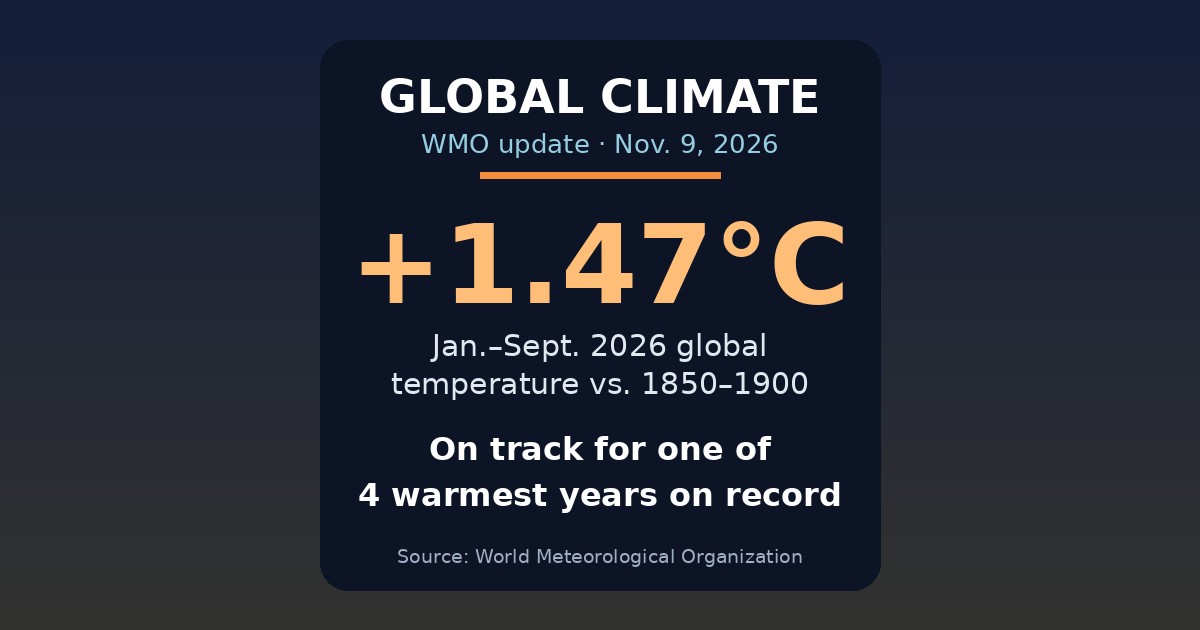
From January through September, the global average near-surface temperature was about 1.47°C (about 2.6°F) above the 1850–1900 average, according to WMO, which combined nine international temperature datasets. That is close to the full-year averages for 2025 (1.43°C) and 2023 (1.46°C) and below the record set in 2024 (1.55°C).
WMO said the years 2023 through 2026 are the four warmest on record, and each of the past 12 years ranks among the warmest since record-keeping began.
Other findings in the update:
Sea level: Global mean sea level reached its highest point in the satellite record, which began in 1993.
Ocean heat: Preliminary data point to a 10th straight year of record ocean heat. WMO says the ocean absorbs about 90% of the excess heat trapped by greenhouse gases.
Ice: Glaciers lost more than 400 gigatons of ice in 2025. This year’s Arctic sea ice maximum was the lowest or second lowest on record, and Antarctica’s was the third lowest.
Warning systems: 136 countries reported having multi-hazard early warning systems in 2025, up from 56 in 2015.
Every Thursday — local news, events, deals, and new listings. Free forever.
El Niño’s role
El Niño, a periodic warming of the tropical Pacific, has been strengthening since August, and WMO expects it to be the strongest on record by December. The agency said El Niño typically adds about 0.1°C to 0.2°C to annual global temperatures, with the biggest effect usually arriving the year after it develops.
“El Niño doesn't add new heat to the planet. It releases heat from the ocean, which is the warmest ever measured. There is simply more heat available to release,” WMO Secretary-General Celeste Saulo said in the agency’s announcement.
WMO plans to publish its final State of the Global Climate 2026 report in March 2027.
Other estimates
Some researchers go further than WMO. BBC News reported that Berkeley Earth, an independent U.S. research group, said it is 95% confident 2026 will surpass 2024 as the warmest year on record. The BBC also noted that the EU’s Copernicus climate service confirmed last week that October was the warmest October on record.
What it could mean here
For the coming months, the NOAA Climate Prediction Center’s seasonal outlook, issued Oct. 15, favors above-normal temperatures for the mid-Atlantic from November through January and gives elevated odds of above-normal precipitation along the Eastern Seaboard, citing the strong El Niño. Those outlooks express probabilities for the season as a whole, not forecasts for any particular week or storm.
Sources: World Meteorological Organization press release; WMO State of the Climate Update for COP31; UN News; BBC News; NOAA Climate Prediction Center.
Featured image: Original Go Fredericksburg data card based on WMO figures.