Virginia Real Estate Advertising Rules Are Changing in 2026 — Here’s What Agents and Consumers Need to Know

Fredericksburg · Community Photo
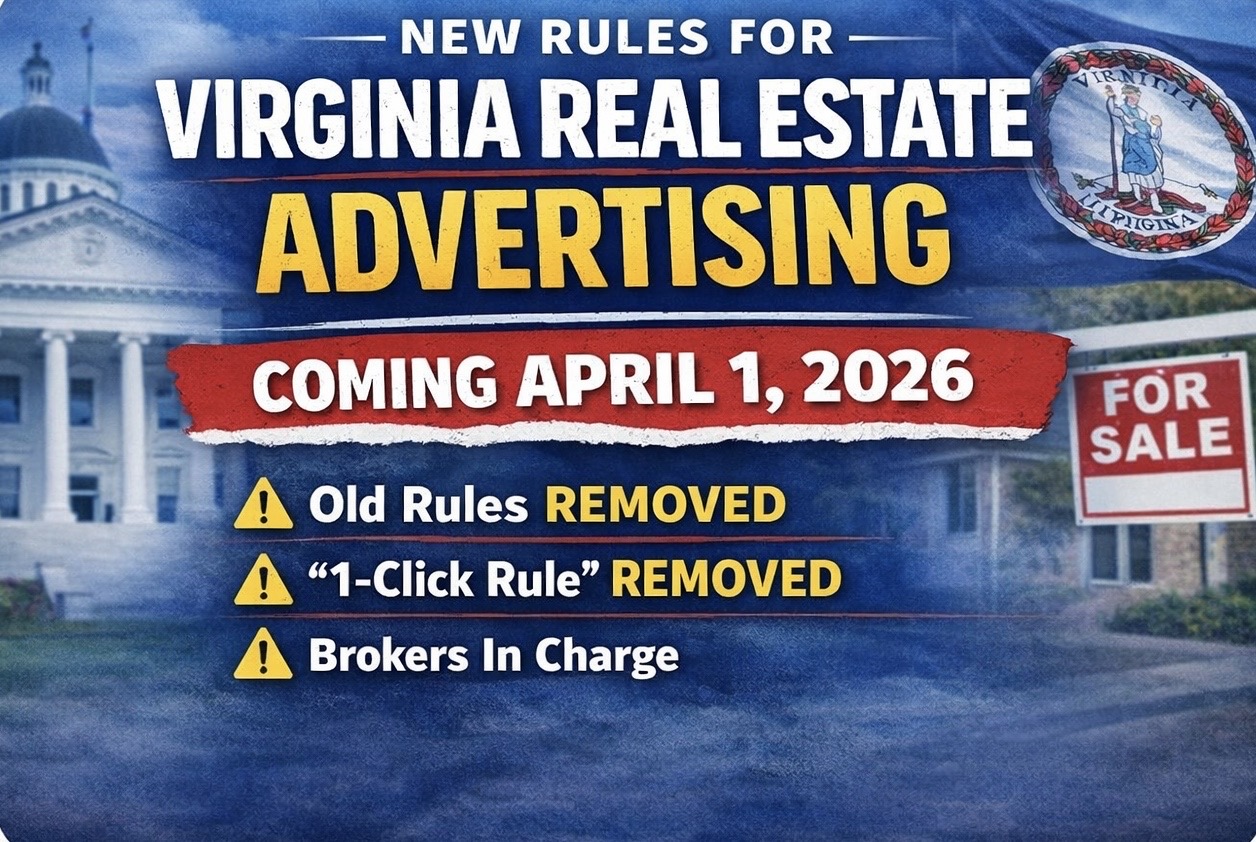
As of April 1, 2026, Virginia has implemented an important update to its real estate regulations—one that directly impacts how agents advertise their services both online and offline.
While this change hasn’t made major headlines, it represents a meaningful shift in how advertising compliance is defined and enforced across the industry.
If you’re a homeowner, buyer, or even a fellow agent, understanding these changes can help you better evaluate who you’re working with—and how real estate professionals present themselves.
What Changed?
The Virginia Real Estate Board revised its regulations to simplify and modernize advertising standards.
Many of the detailed, step-by-step rules that previously governed how agents structured their advertising have been removed or consolidated. In their place, the updated regulations focus on broader, more enforceable standards centered around transparency and consumer clarity.
Under the updated framework:
- Advertising must be clear, accurate, and not misleading
- The real estate firm must be clearly identifiable
- All advertising must be conducted under the supervision of the principal or supervising broker
Rather than relying on technical formatting rules, the emphasis is now on whether a consumer can easily understand who they are dealing with.
What Happened to the “1-Click Rule”?
One of the most talked-about concepts in recent years has been the “1-click rule,” which allowed brokerage disclosure to appear either directly on an advertisement or within one click of it in digital formats.
In the updated regulations, this specific language has been removed.
That does not eliminate the expectation of disclosure—it strengthens it.
The focus is no longer on whether disclosure exists within a certain number of clicks, but whether it is clear, visible, and easily understood by the consumer without confusion.
In practical terms, this means agents should no longer rely on hidden pages, buried links, or indirect disclosures to establish compliance.
What This Means in Practice
For real estate professionals, this change increases both responsibility and oversight.
Agents must now ensure that their advertising:
- Clearly connects them to their brokerage
- Is transparent and not misleading in any way
- Aligns with the policies and approval of their principal or supervising broker
At the same time, principal brokers now carry greater responsibility for ensuring that all advertising under their supervision meets these standards.
This is a shift away from “checking boxes” and toward demonstrating clear and professional representation in every piece of marketing.
Do Ads Still Need to Include the Brokerage Name?
The updated regulations require that advertising include a clear and conspicuous disclosure identifying the firm and providing contact information.
While the rules no longer rely on older technical structures like the “1-click” framework, the expectation is stronger in one key area:
👉 The consumer should be able to immediately understand which brokerage is behind the advertisement.
In many cases, this means the brokerage should be:
- Clearly visible within the advertisement itself, or
- Presented in a way that is obvious and directly connected to the ad experience
If a consumer cannot quickly determine who the agent works for, the advertisement may be considered non-compliant.
Why This Matters to Consumers
For buyers and sellers, this update reinforces the importance of transparency in real estate.
A well-structured advertisement should make it easy to understand:
- Who the agent is
- What company they represent
- How to contact them
If that information is unclear, difficult to find, or appears intentionally hidden, it’s worth asking additional questions before moving forward.
The Bottom Line
Virginia did not eliminate advertising regulations—it strengthened them by focusing on clarity, transparency, and accountability.
The removal of detailed technical rules—like the “1-click” concept—signals a shift toward a higher standard:
👉 Consumers should never have to search to understand who they are working with.
For agents, this means every piece of marketing must clearly and accurately represent both the individual and the brokerage behind it.
Educational Disclaimer:
This article is intended for informational purposes only and does not constitute legal advice. Real estate professionals should consult their principal broker or legal counsel for guidance specific to their brokerage policies and compliance requirements.